
Afghanistan & Central Asia
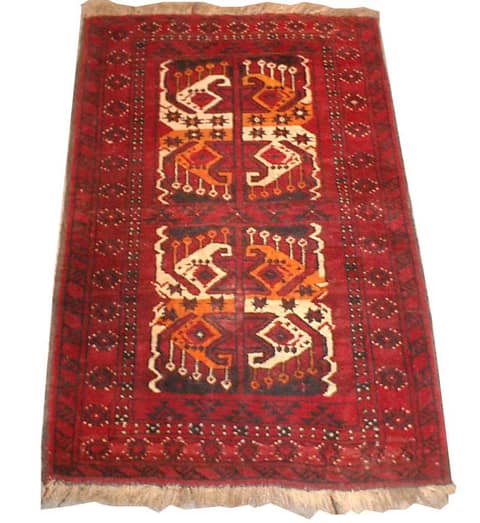
Ersari Tribal Rug with Paired Kejebe Panels
Old Carpets
A small Turkmen-Ersari rug whose red field is divided into mirrored compartments filled with hooked motifs in ivory, apricot and indigo — a vocabulary related to the kejebe and bird forms of Central Asian weaving. Gül-and-diamond guard borders frame the field. Lustrous wool with bright, well-preserved natural colour.
The tradition
Afghanistan & Central Asia
This shelf gathers older Afghan and Turkmen carpets that have already lived a life. Decades of use soften a carpet's wool and gently mellow its dyes, giving the deep madder reds and dark blues a patina — the prized, lightly burnished glow that collectors look for and that no new carpet can imitate.
Most pieces here belong to the Turkmen and Afghan tribal tradition, built around repeating gül medallions on a red ground, a design language that has stayed remarkably constant across generations of nomadic and village weavers.
Motifs & meaning
Reading the design
Tribal Afghan and Turkmen carpets speak in repeating, heraldic motifs rather than scenes.
Gül
A tribe's heraldic medallion, repeated across the field as a mark of identity.
Elephant-foot (Filpa)
The bold octagonal gül of Afghan weaving.
Diamond lattice
Order, fertility and the woven structure of the land.
Kufic-style border
An angular guard band offering protection.
Materials & technique
How it is made
Hand-knotted in wool with the dense, hard-wearing build of Central Asian tribal weaving. Age and use have burnished the surface and settled the natural dyes into a warm, lived-in patina.
Interested in ersari tribal rug with paired kejebe panels?
Leave your email or WhatsApp and we'll share current availability, pricing and condition.